
Context
Research conducted on the presence of water as a transnational resource along the United States-Mexico border settles a challenging mind set for cooperation and optimized management of one of the most fundamental resources to life. Amidst the intense drought which is affecting the south of the United States and the north of Mexico, cooperation and compromise become a priority both for national and transnational interests.
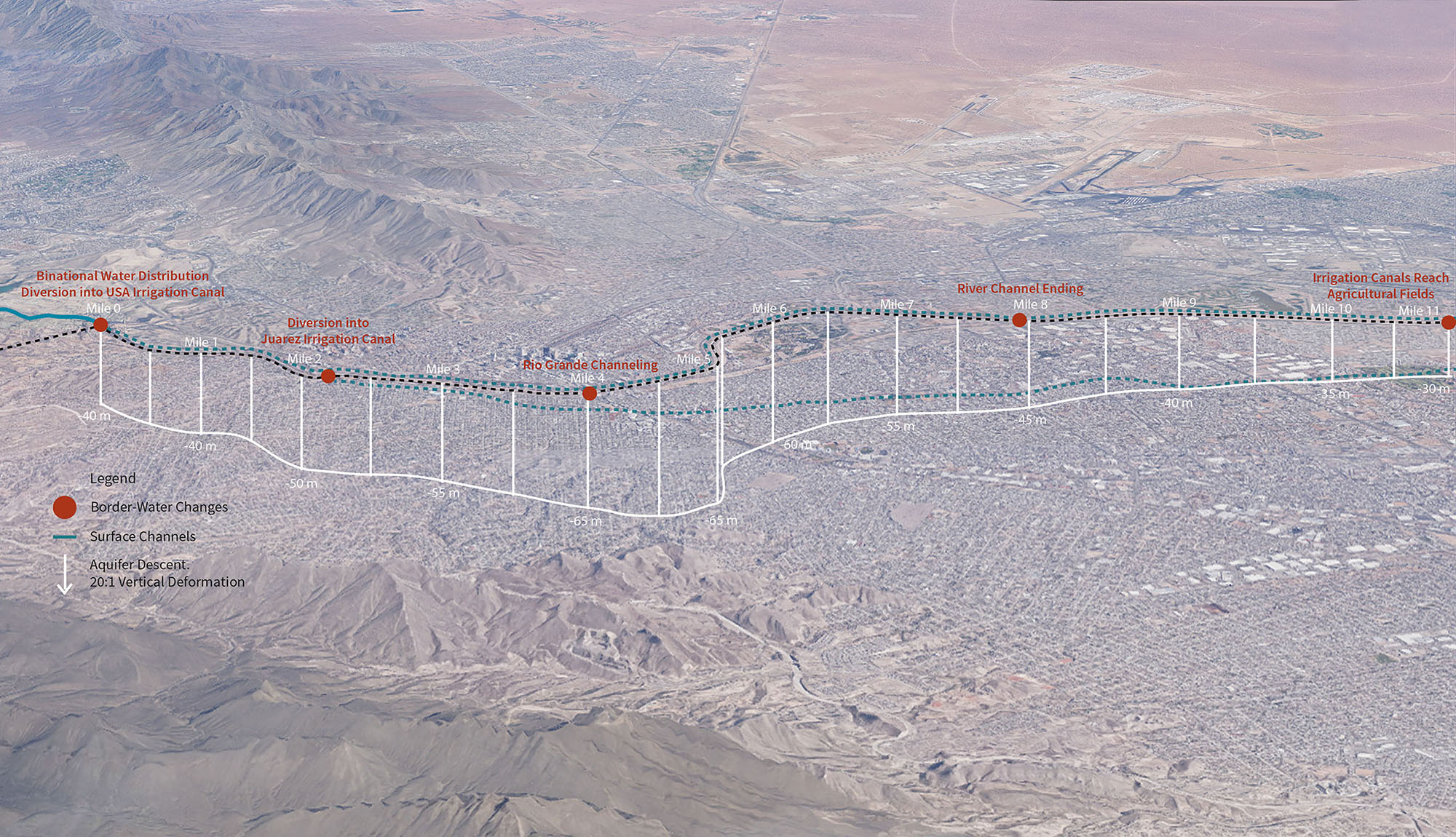
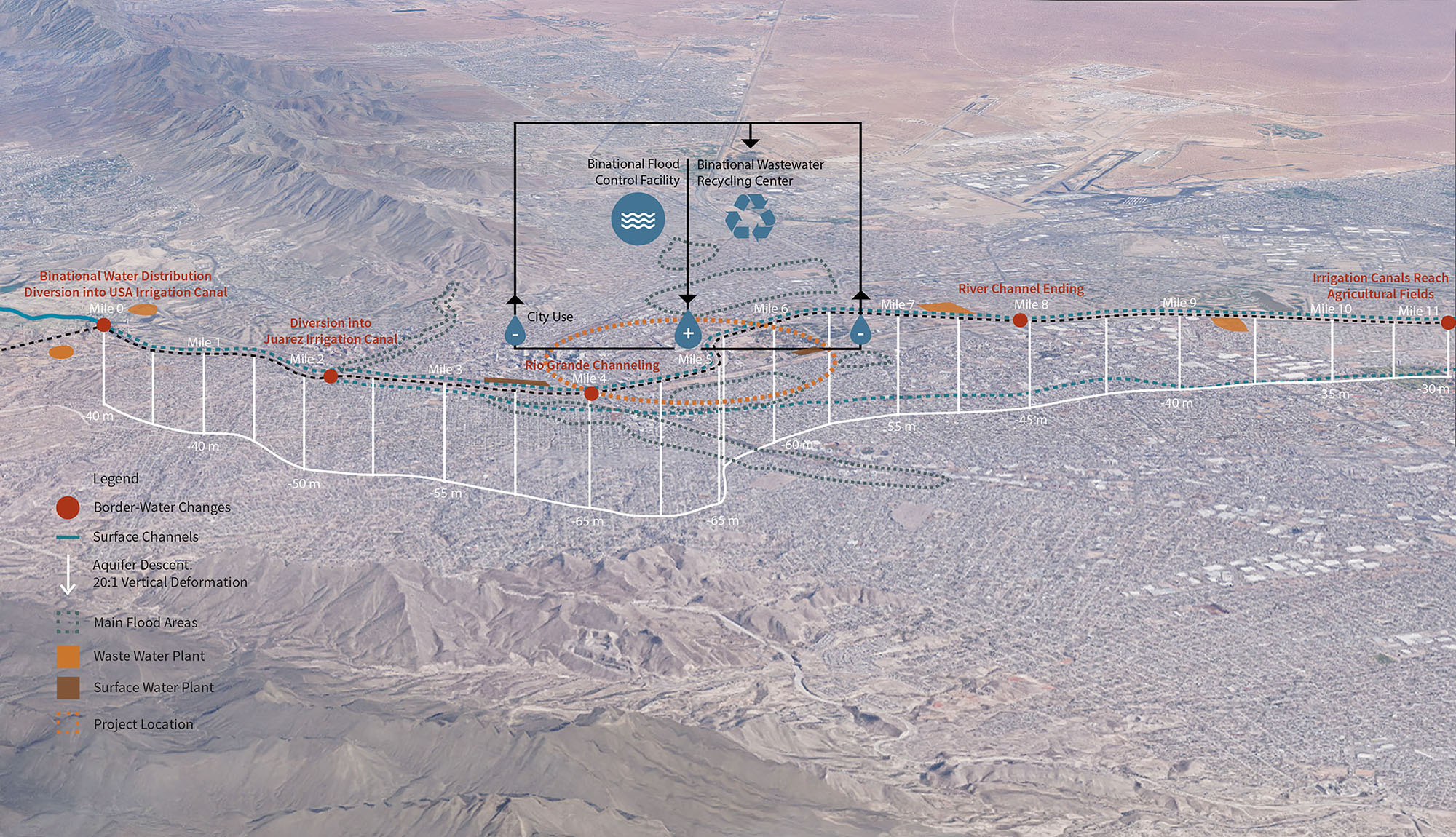
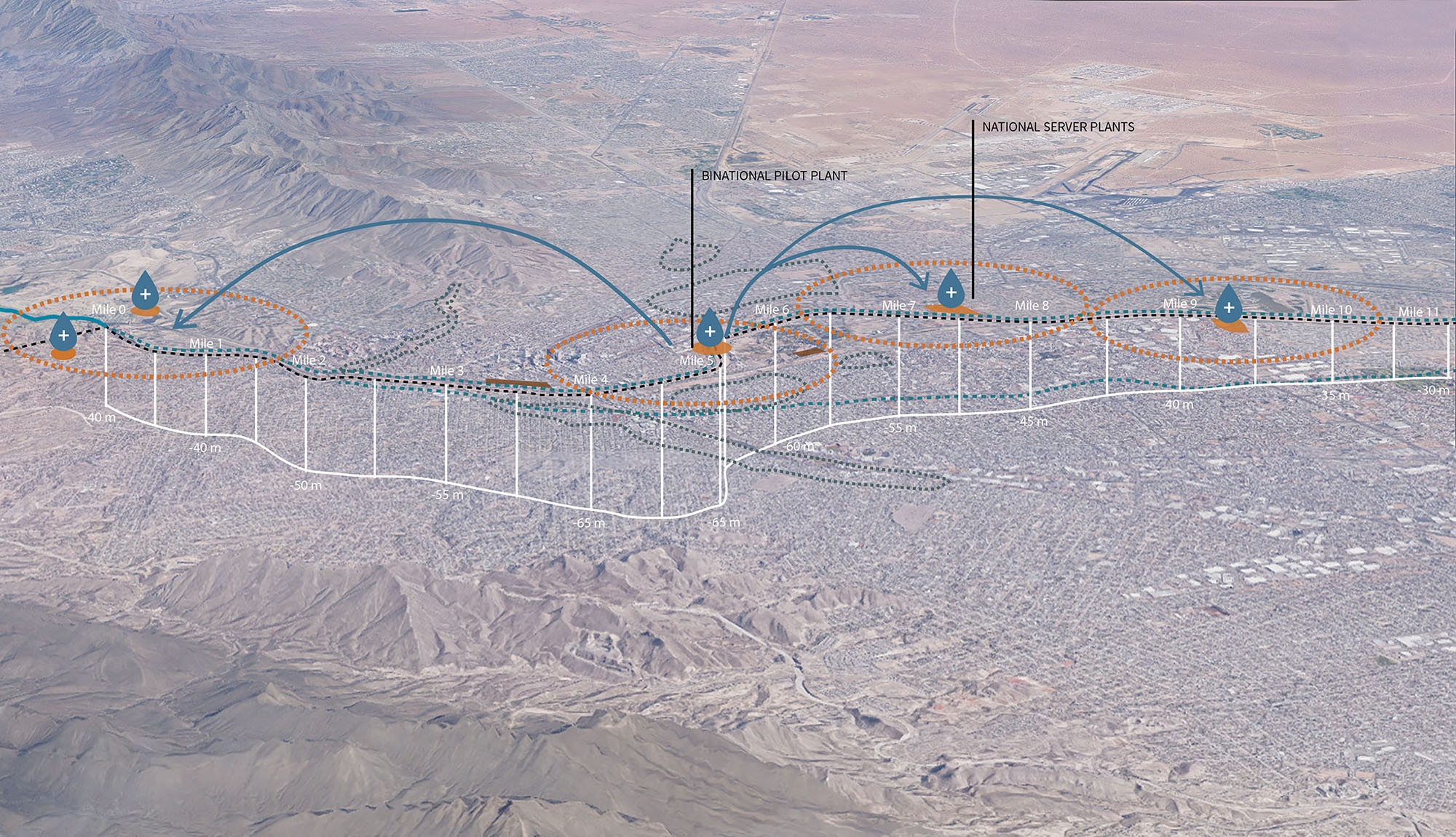
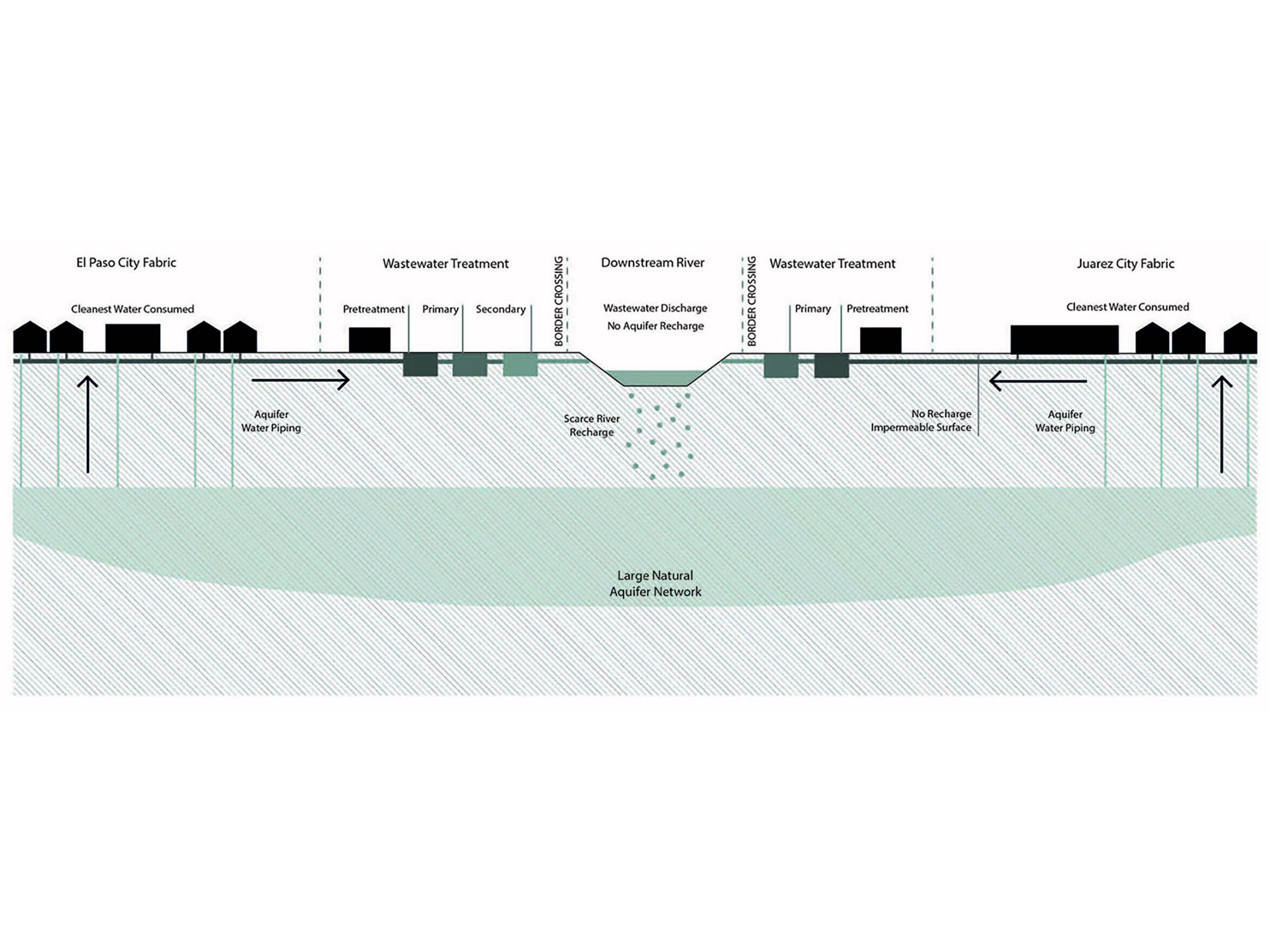
Focusing the investigation on the situation found at El Paso-Ciudad Juarez, the aim is to reveal which strategies have been conducted in the past and what feasible options for improved management lie ahead. Water is analysed through its natural and artificial cycles, from surface and groundwater resources, to city infrastructures such as purification and wastewater treatment plants, and domestic infrastructures such as municipal and domestic pools and gardening culture.
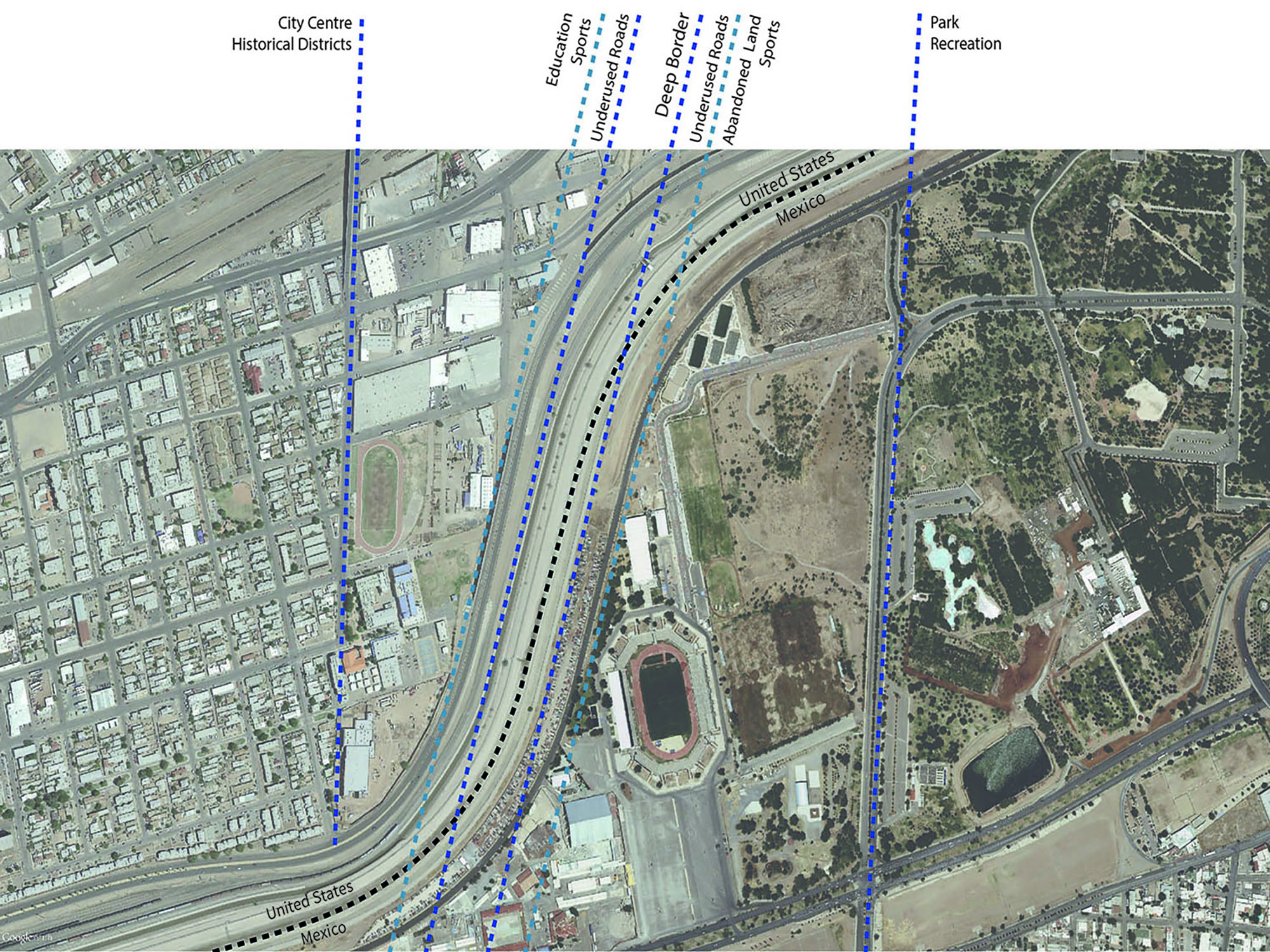
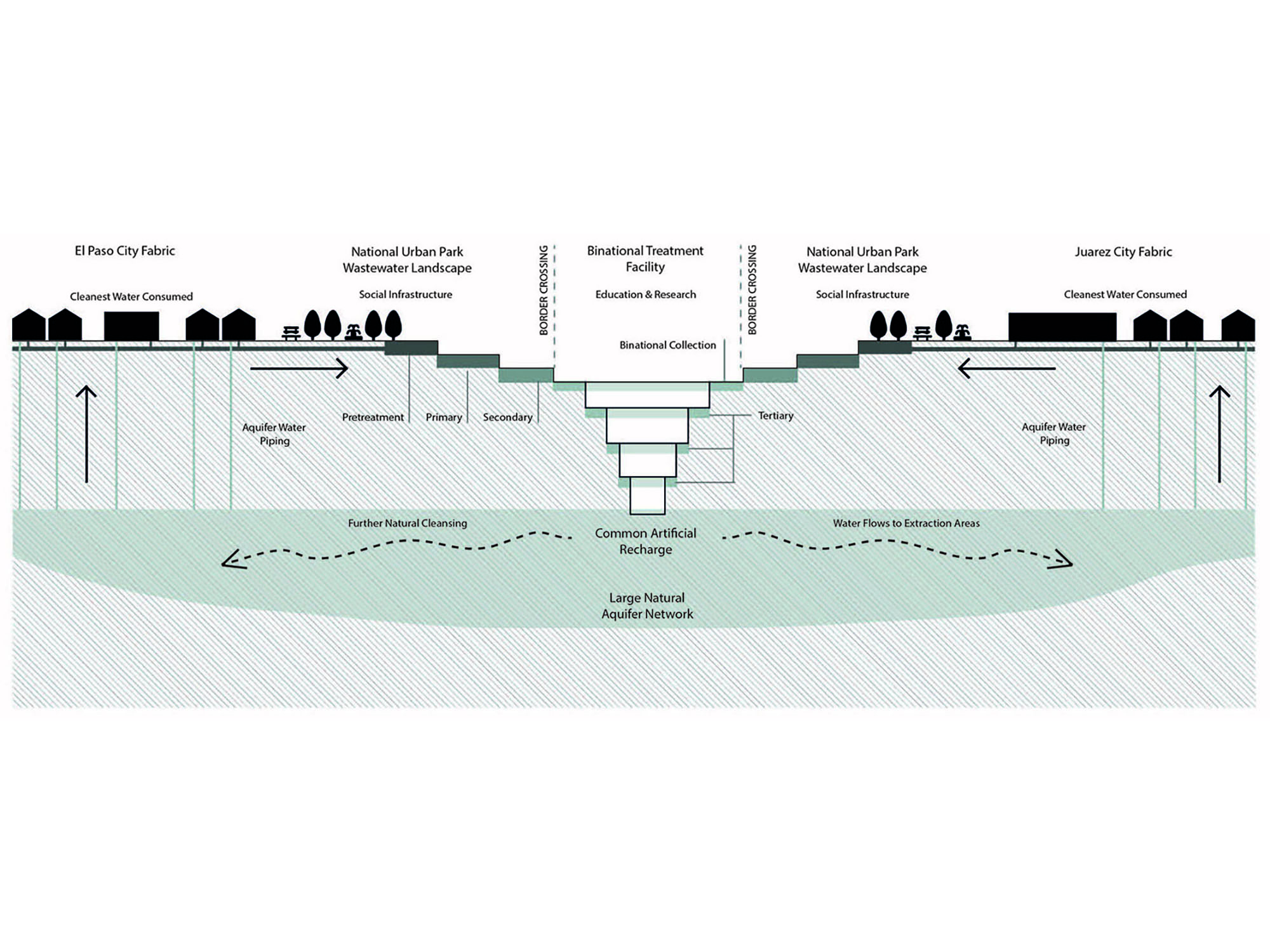
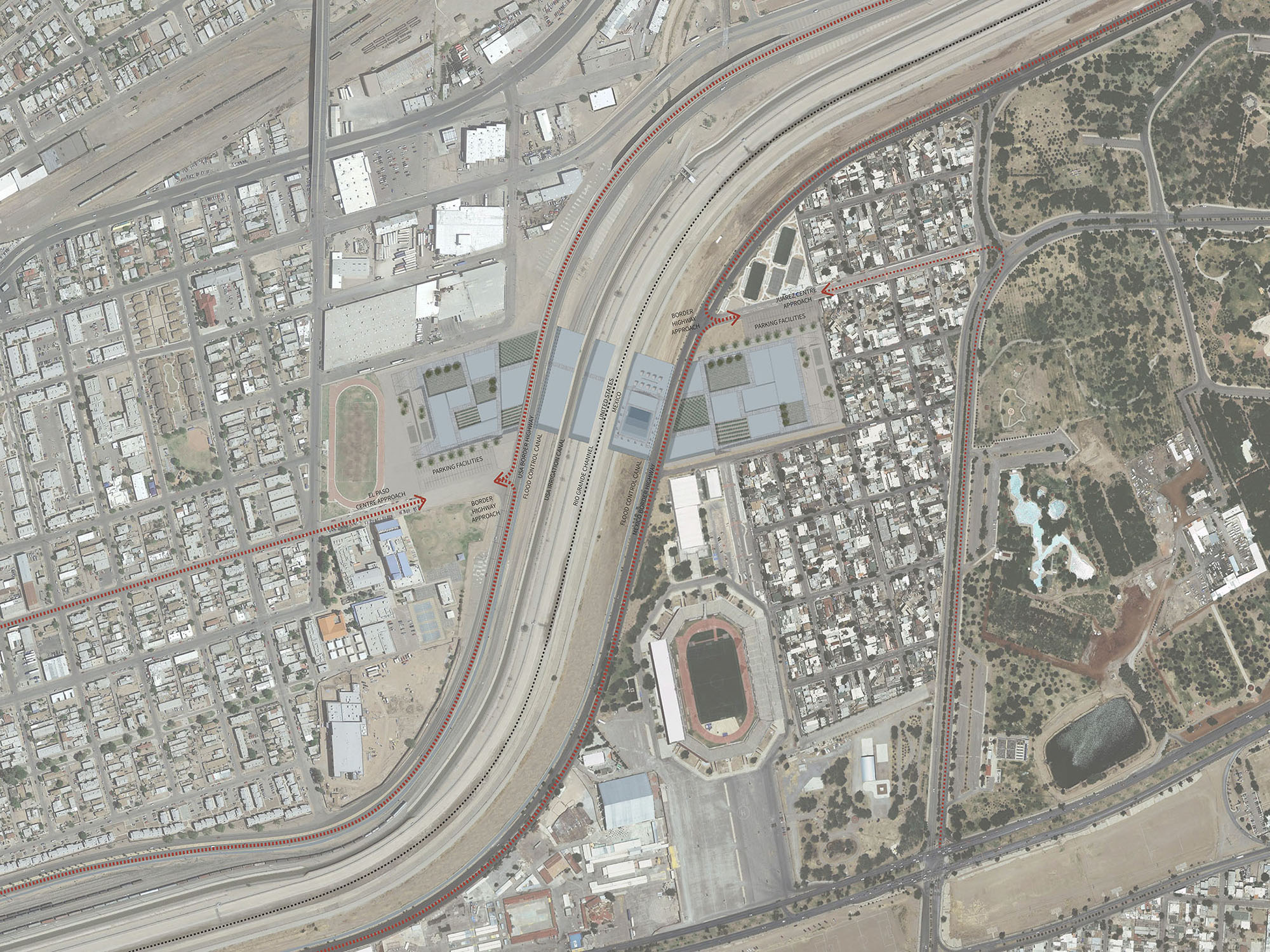
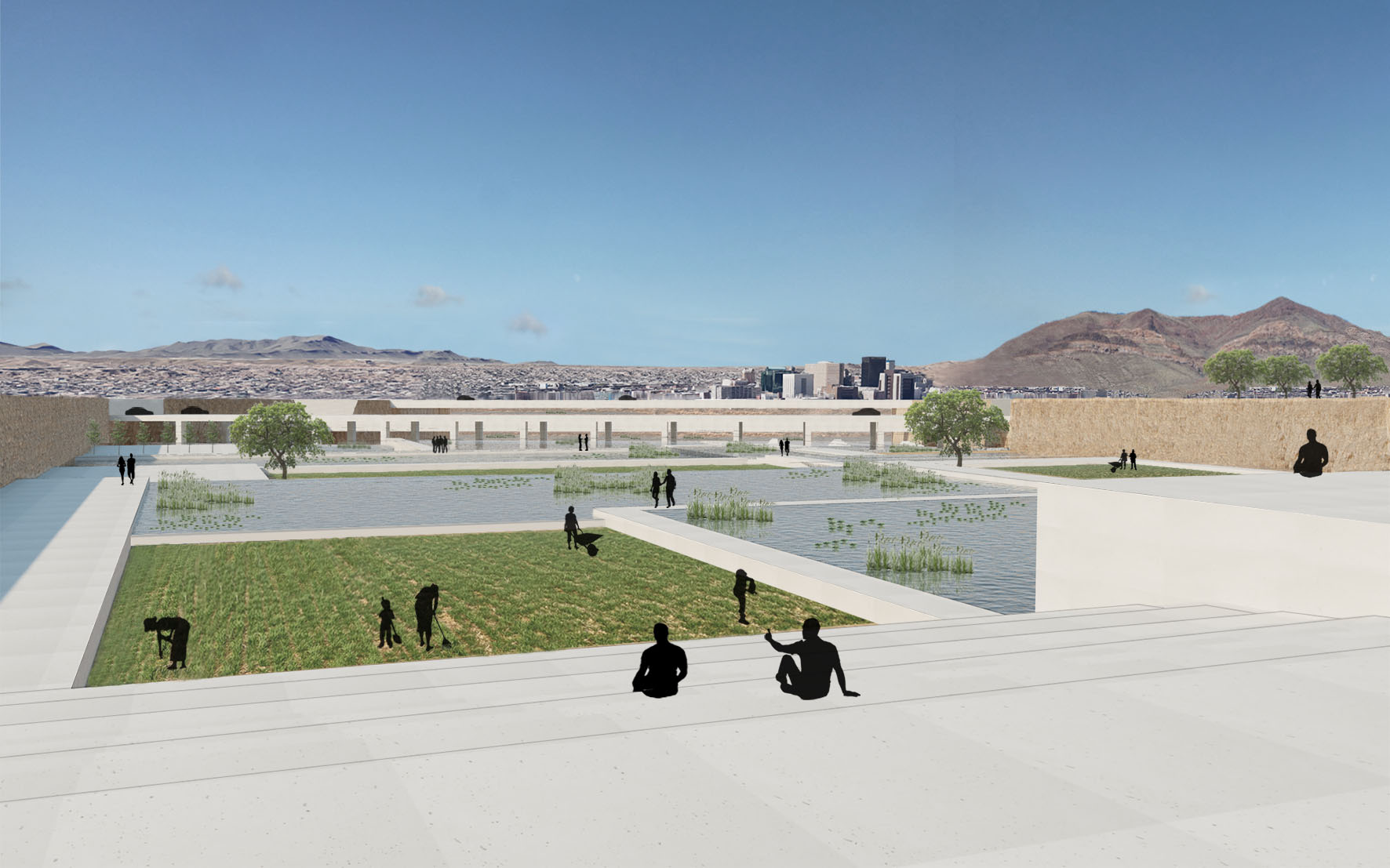
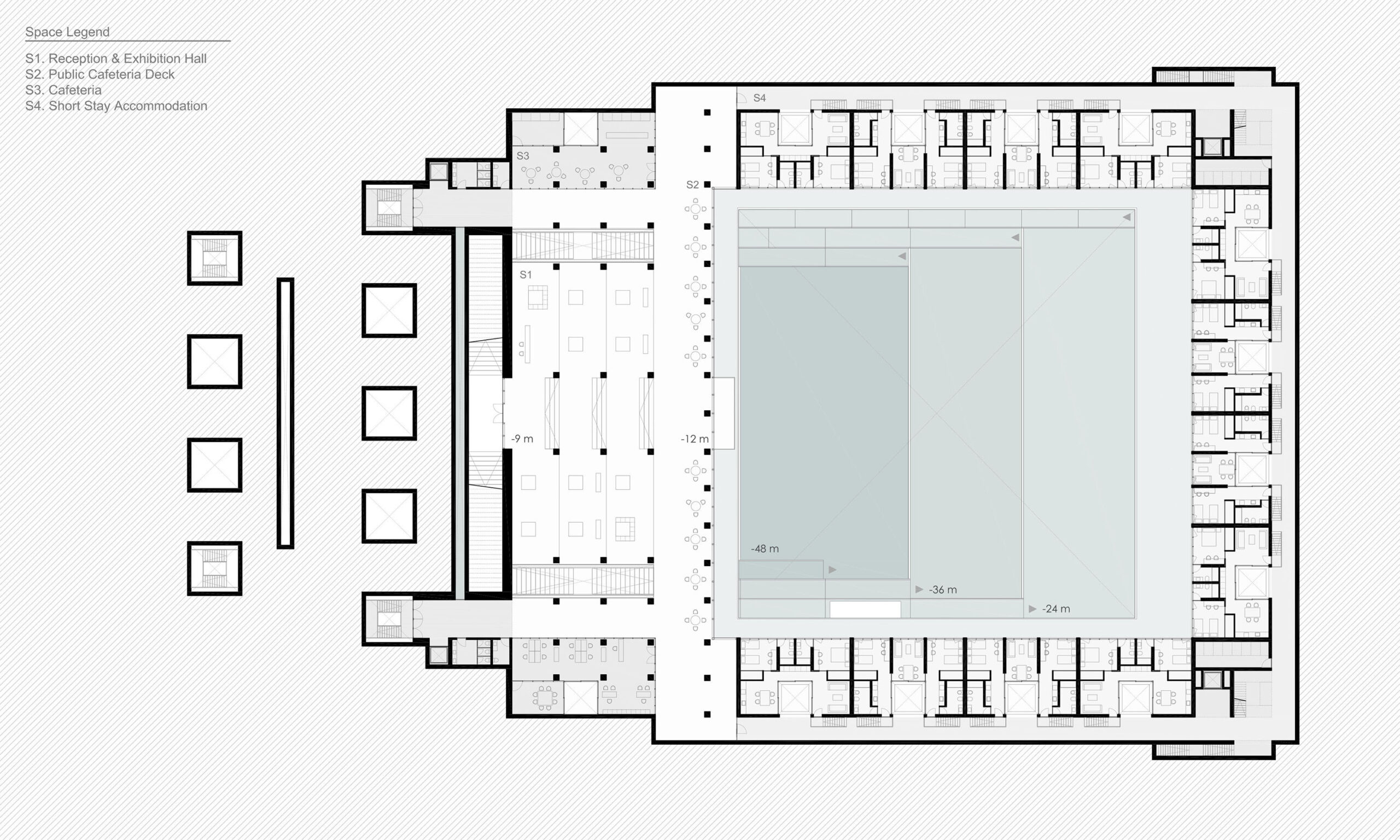
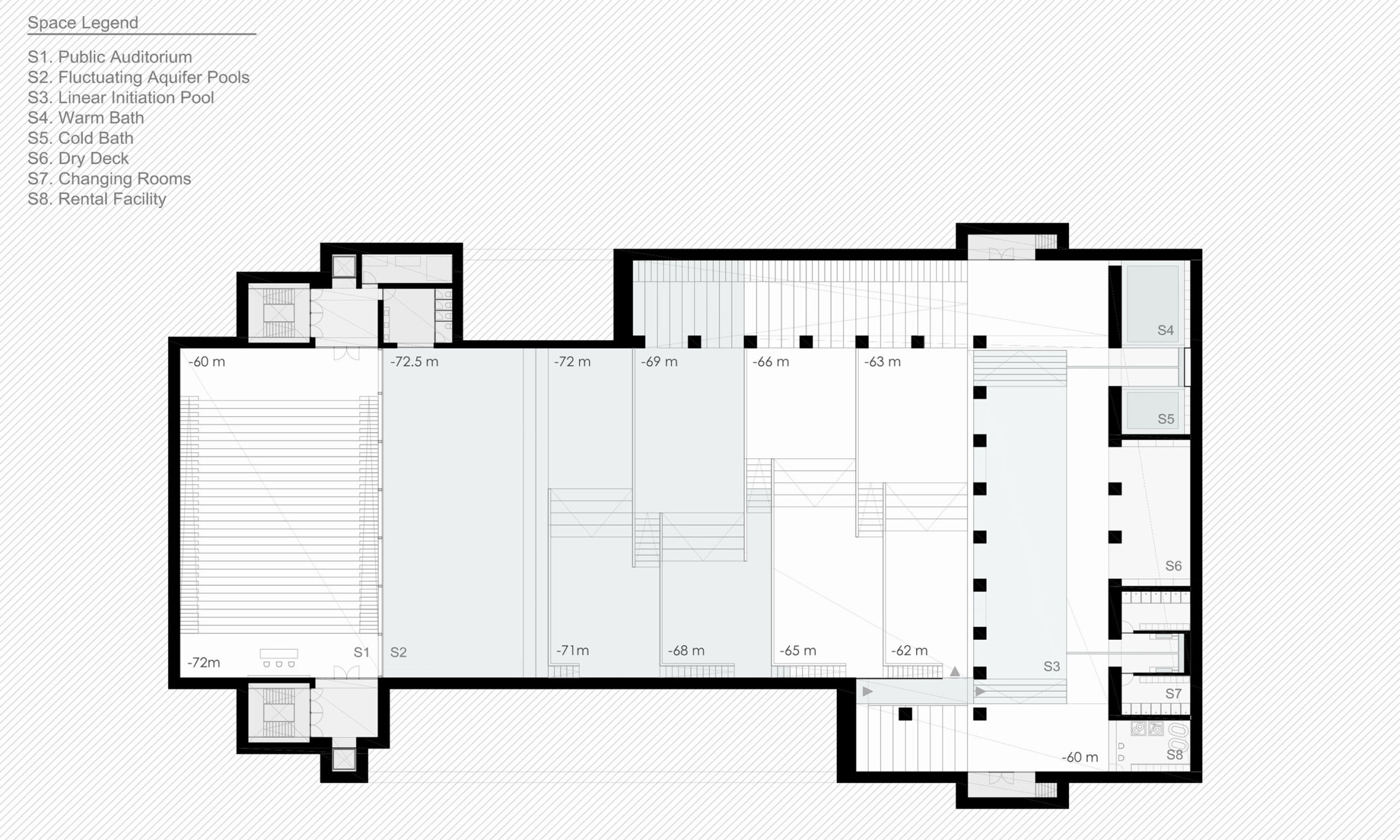
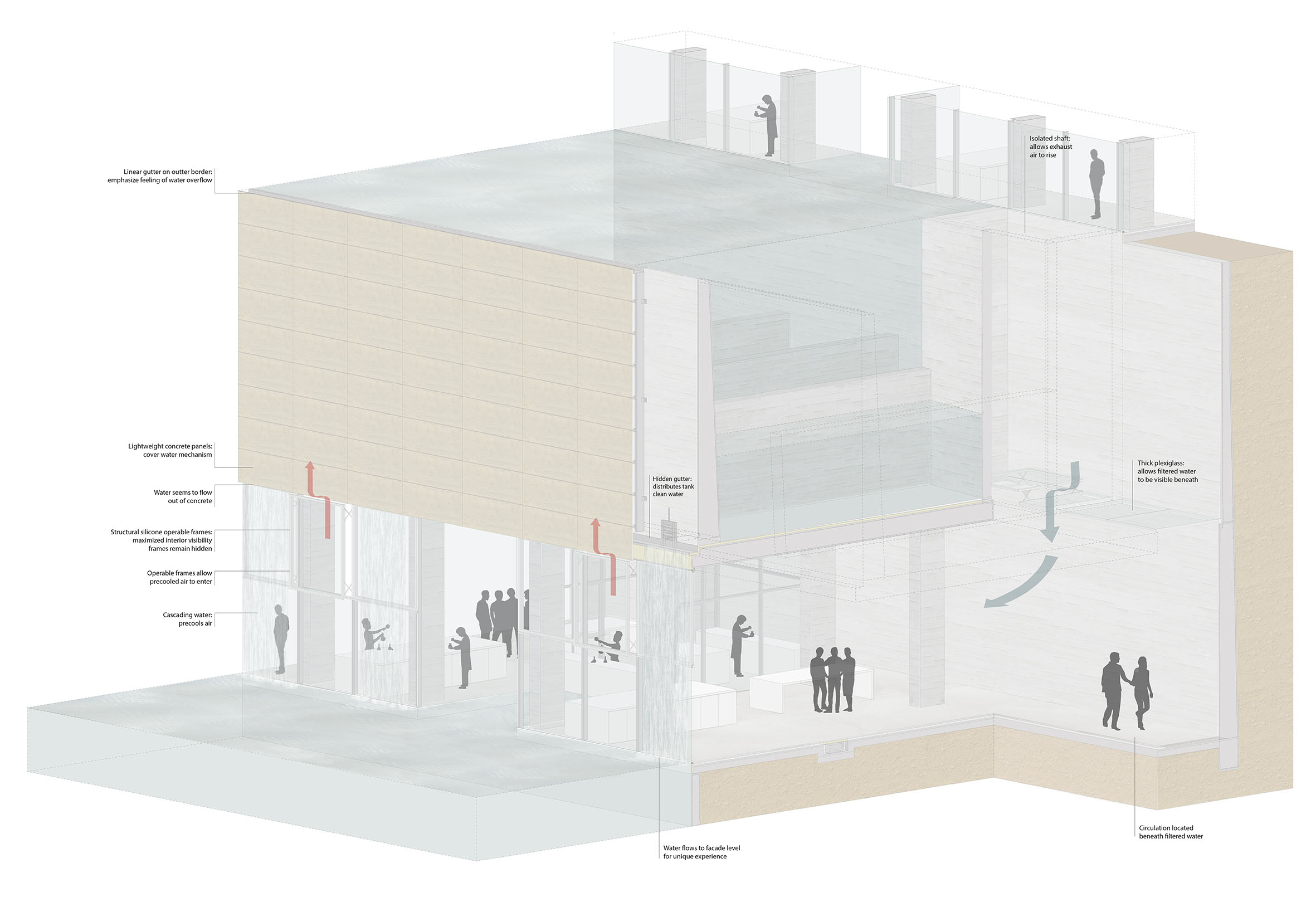
The main objective is to understand if a new architectural approach that considers the aforementioned resources and processes as a whole can provide better awareness and sensitivity towards the concept of water culture. In this sense the architecture of the project becomes an incubator of social activity around water. This is a bold attempt at showcasing how proximity leads to enhanced understanding and caring. By allowing citizens to have direct access to activities that influence the water cycle, the aim is to distribute knowledge and responsibility horizontally and internationally, rather than in a vertical hierarchy with local or national limitations.
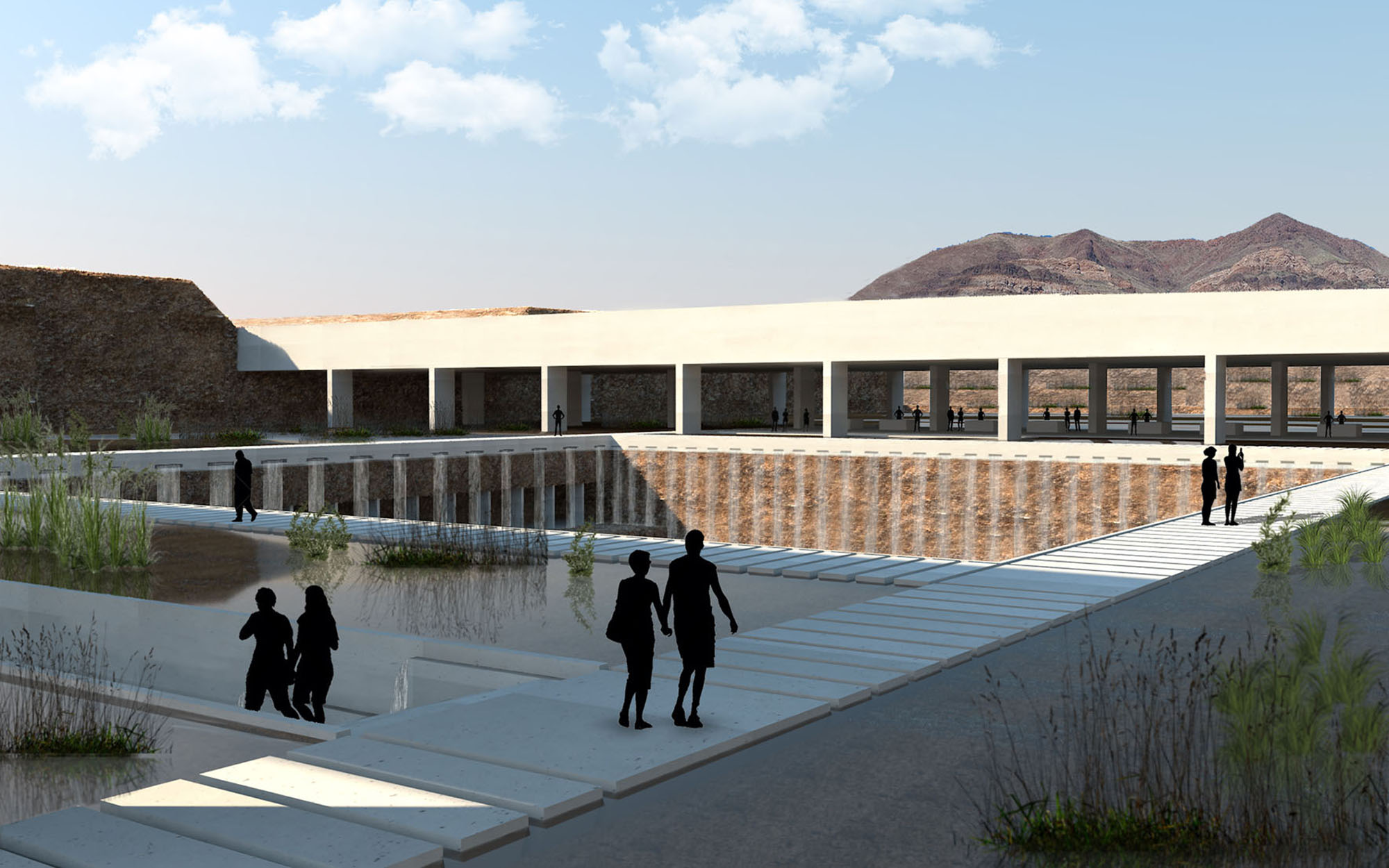
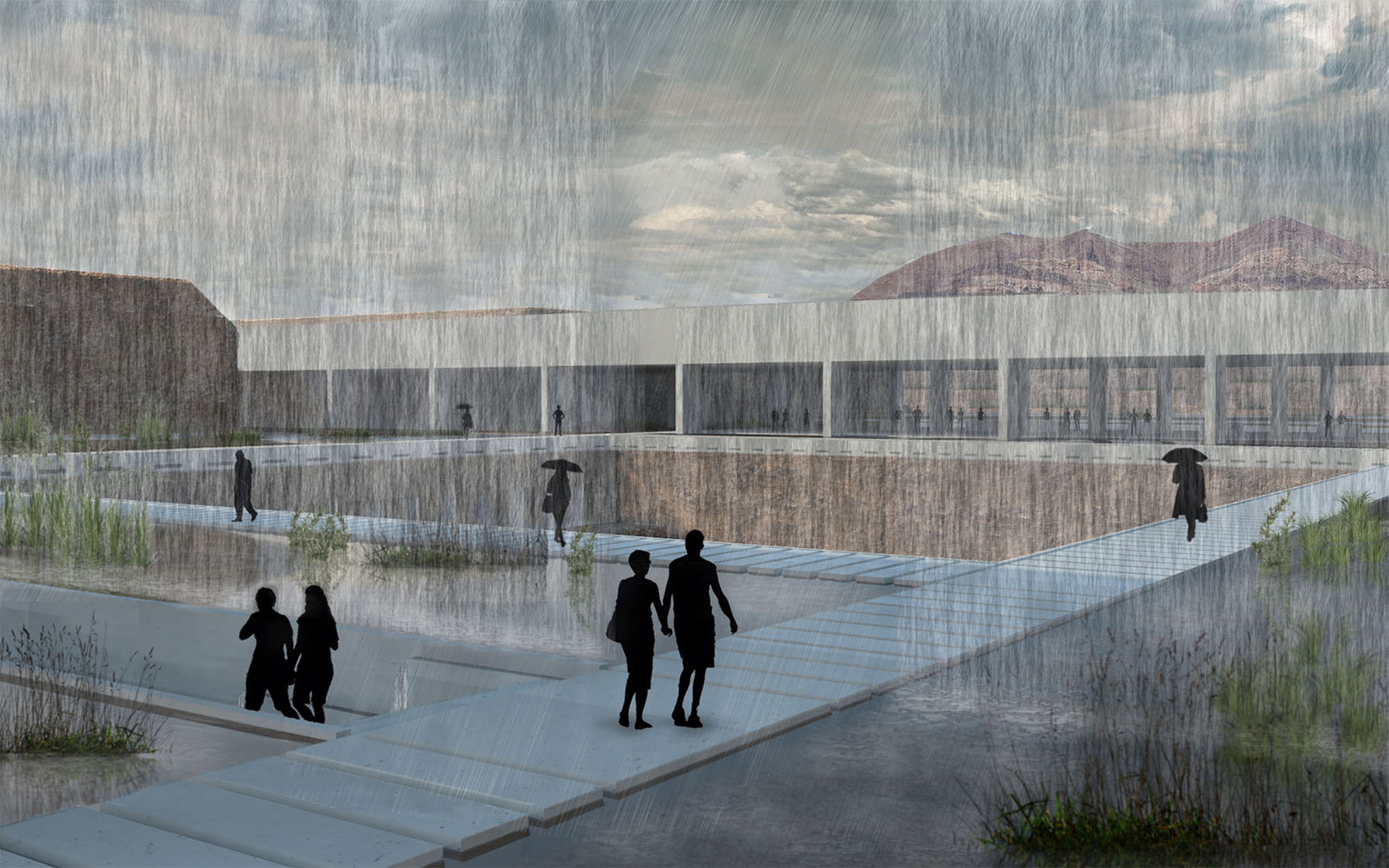
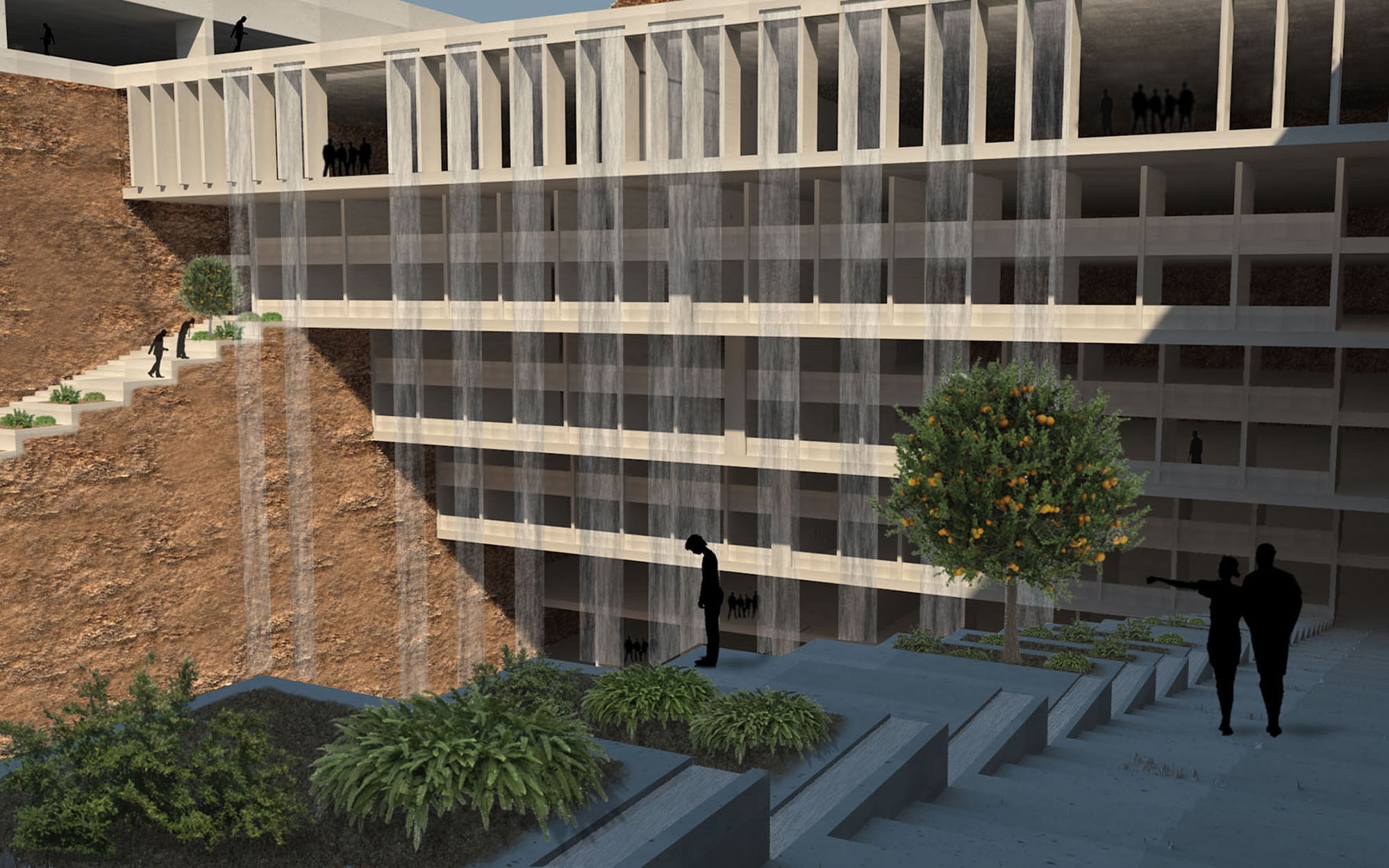
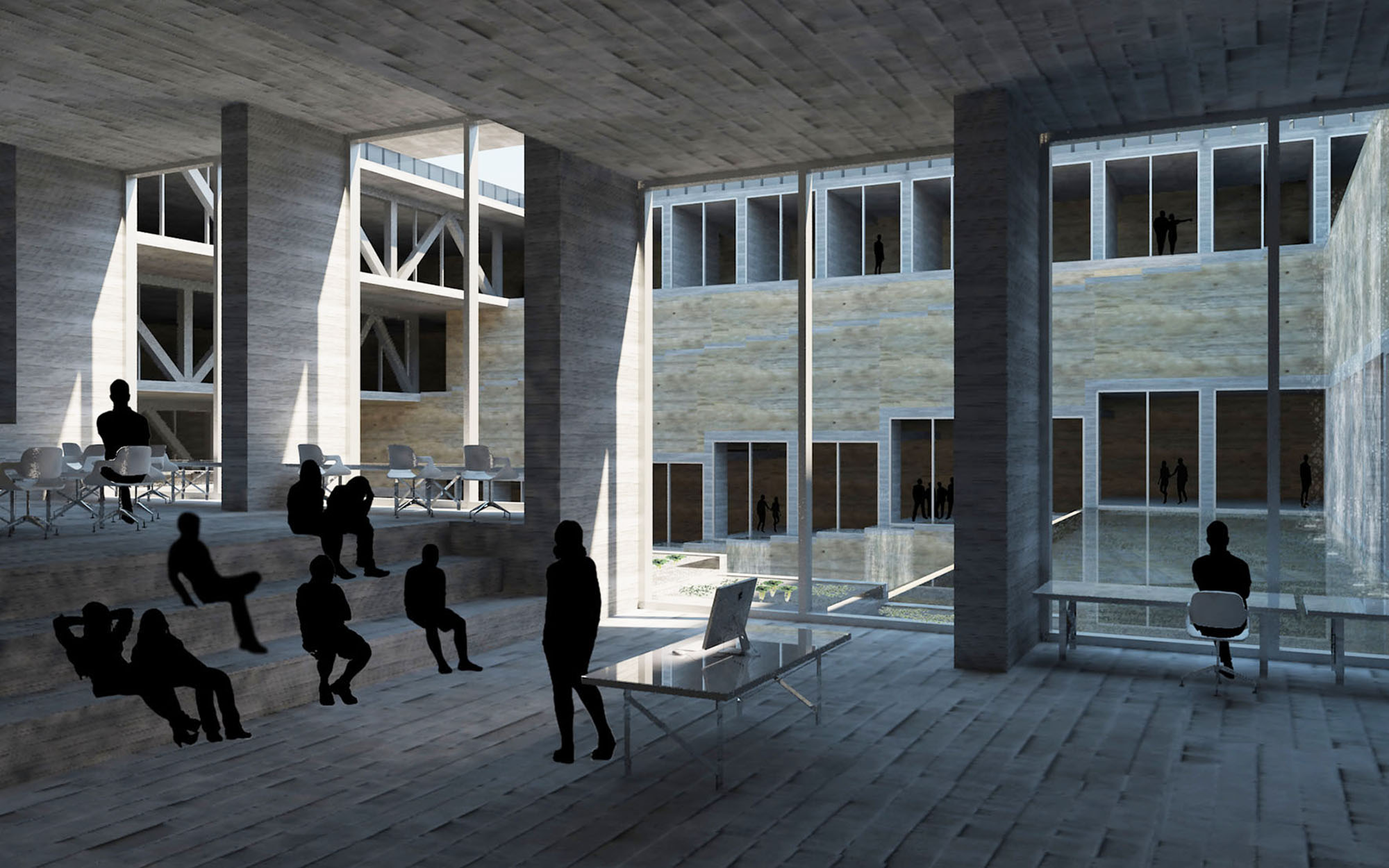
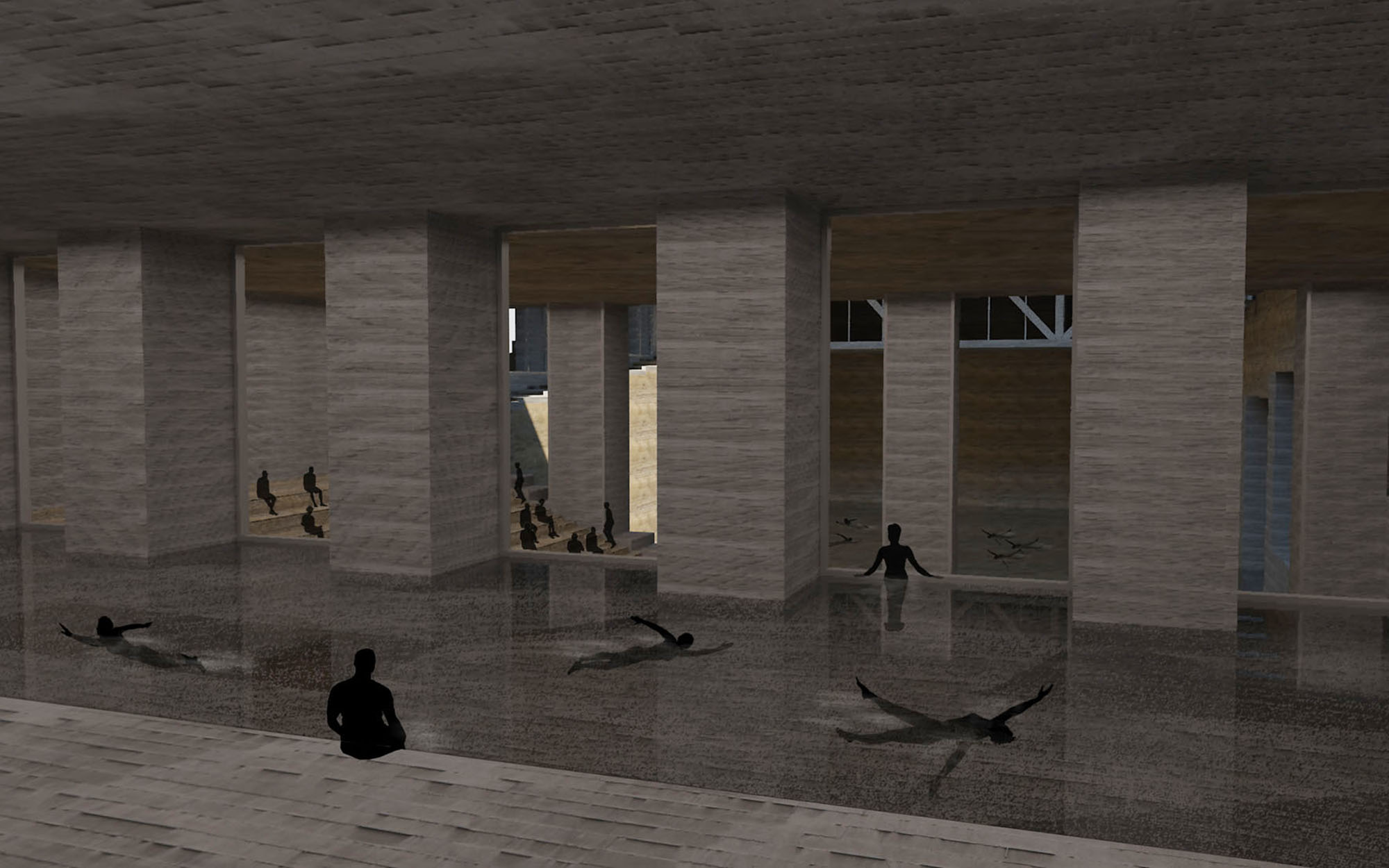
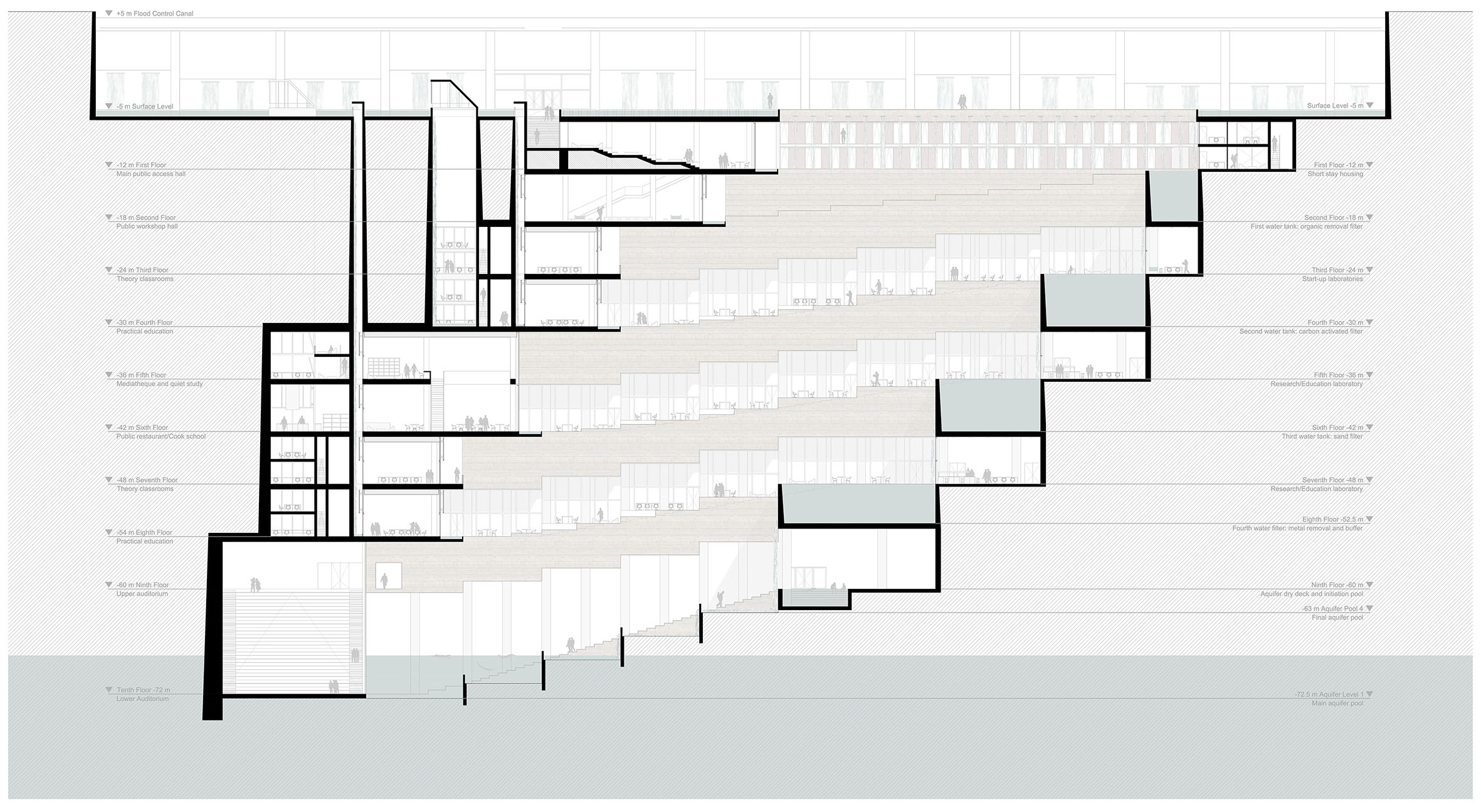
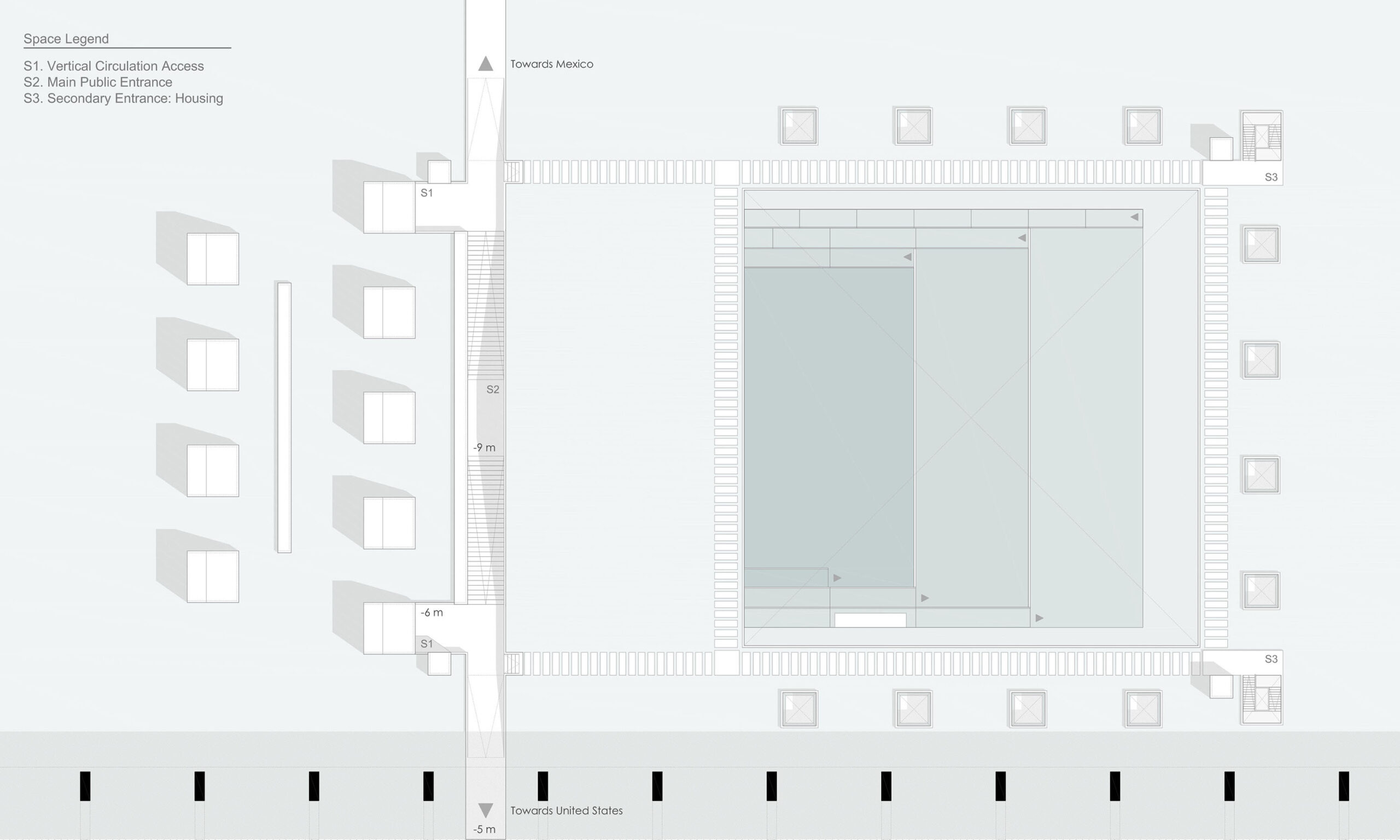
The concept can be scaled upwards to suit larger transnational schemes or simplified to the necessities of smaller communities, depending on the complexity of the water system involved. In this case, the architecture develops into the ground following the rapidly depleting levels of underground water. It manifests as an opening that allows to literally understanding how water flows through its life cycle, and in which phases of this cycle value can be extracted for human use and re-use. People become empowered to take action by seeing for themselves how they can form part of a healthier water culture.
Client
TU Delft
Date
2016
Location
El Paso, Ciudad Juárez
Status
Thesis
Program
Mixed Use
Author
James Moya
Awards
Archiprix NL Nomination
Publications
Architectuur NL – Issue 5, 2017
Links
https://www.architectuur.nl/architect-2/master-among-masters/aquatic-village/